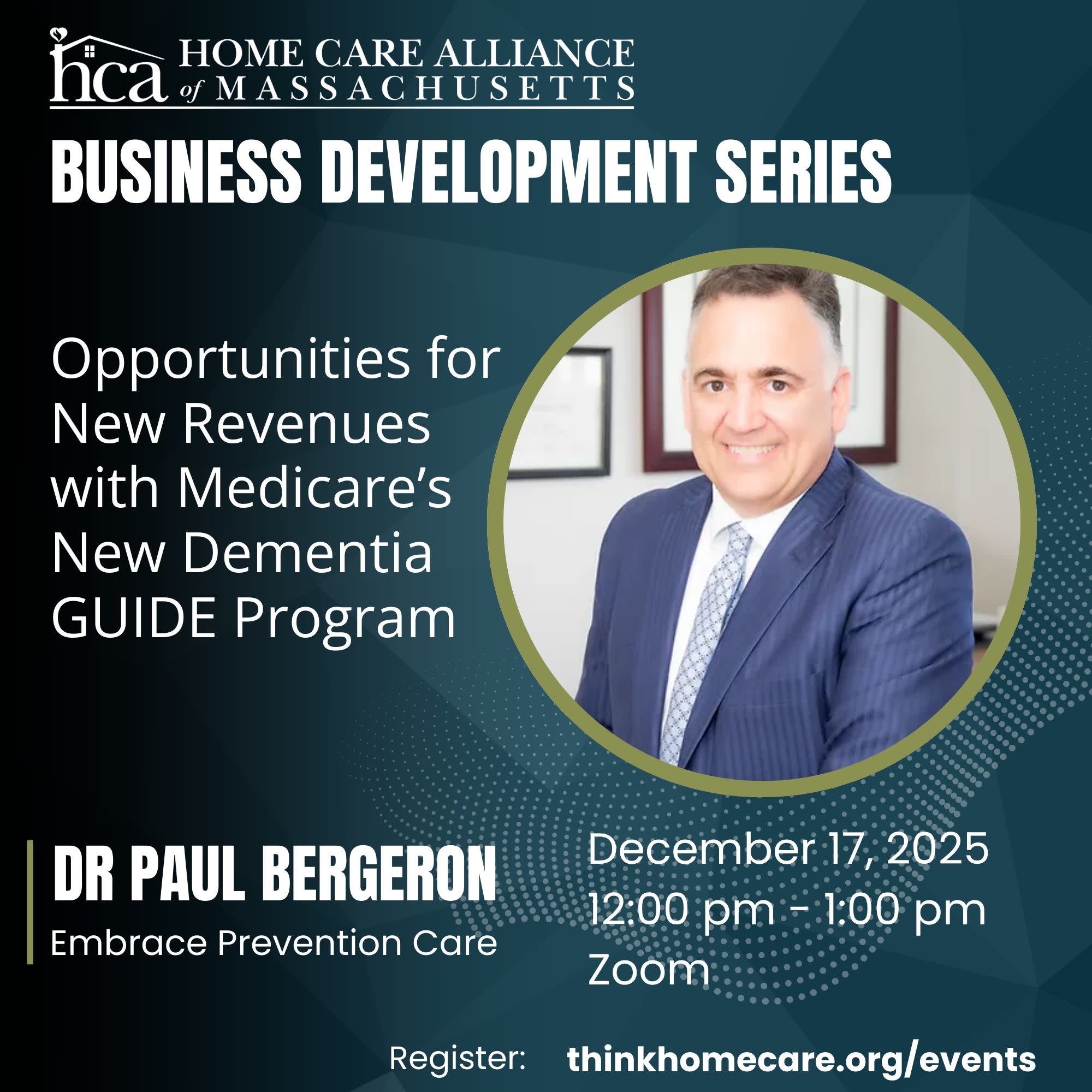
For millions of families, dementia care unfolds quietly at home, carried largely by unpaid caregivers navigating a fragmented health care system. Medicare’s new GUIDE program is designed to change that — and in doing so, it may reshape how home care agencies engage with one of the fastest-growing, most complex patient populations in the country. Launched by the Centers for Medicare & Medicaid Services (CMS), the GUIDE program — short for Guiding an Improved Dementia Experience — is an eight-year national initiative focused on care coordination for people living with dementia and the family members who support them. CMS estimates that roughly 7 million Americans currently live with dementia, a number expected to double in the coming decades as the population ages. The stakes are high. Dementia patients experience substantially higher hospitalization rates than other older adults, and their annual health care costs are estimated to be roughly three times higher. Much of that burden falls on Medicare — and on families struggling to keep loved ones safely at home. GUIDE represents Medicare’s most comprehensive attempt yet to address both sides of that equation: the medical consequences of dementia and the toll on caregivers who, in practice, make “living at home” possible. A shift toward coordination and prevention Unlike traditional Medicare services that are triggered by a visit, a diagnosis, or a hospitalization, GUIDE is built around continuity. The program emphasizes ongoing care coordination, caregiver education, and navigation of community supports — all at no cost to patients and families. Eligibility is specific. Patients must have traditional Medicare and a documented dementia diagnosis. No physician referral is required, and patients can enroll directly. Those in hospice or long-term skilled nursing facilities are excluded, as are Medicare Advantage beneficiaries — narrowing the pool, but keeping the program within fee-for-service Medicare. The design is “virtual-first,” relying on care navigators who maintain regular contact with patients and caregivers. But CMS has made clear that GUIDE is intended to connect people to local services — the day-to-day supports that prevent crises: safer homes, respite breaks, and practical coaching for families. Caregiver respite is a centerpiece One of GUIDE’s most notable features is direct support for unpaid caregivers, including more than $2,500 per year in respite funding. It’s a recognition of a reality long understood by families and clinicians: caregiver burnout often arrives before a medical breaking point does — and can be the decisive factor in nursing home placement. By funding respite and wrapping it in a broader care coordination model, CMS is attempting something rare in Medicare policy: paying for prevention that happens outside the clinic. What this could mean for home care agencies For home care agencies, GUIDE introduces a new kind of opportunity — and a new kind of responsibility. CMS has approved roughly 330 GUIDE participant organizations nationwide, with 16 currently operating in Massachusetts. These participant organizations can contract with home care agencies to deliver reimbursable, defined services tied to dementia support. Those services can include home safety assessments, respite care visits, caregiver education, and comprehensive assessments that document cognitive status, caregiver burden, and social needs. Agencies are not required to offer everything. The program can be approached incrementally, starting with simpler services and expanding as comfort and capacity grow. In practice - Start small: home safety checks, caregiver coaching, limited respite coverage.
- Scale over time: comprehensive assessments, transition support, deeper care coordination.
- Confirm fit: GUIDE participant zip-code coverage must align with your service area.
- Prepare for audits: documentation and visit tracking must be CMS-ready.
The attraction is not only reimbursement — which varies and can be modest, particularly for respite — but access. GUIDE participants are positioned to become referral engines for dementia families seeking in-home support. Several program leaders have emphasized the importance of referral “stickiness”: ensuring that families who are introduced through GUIDE remain connected to the partner agency when additional hands-on services are needed. Compliance, documentation, and the audit question The primary operational risk is compliance. CMS audits GUIDE participant organizations, and agencies supporting those participants must maintain accurate, defensible documentation of visits: who went, when, and what was delivered. That can be especially salient in states like Massachusetts, where in-home caregivers may not hold individual licenses even as agencies operate under broader regulatory expectations. GUIDE services themselves are largely non-clinical in nature — the work is coordination, education, and support — but the standard for documentation is decidedly clinical: clear notes, reliable tracking, and consistency across staff. A program built with equity in mind CMS has embedded health equity requirements into GUIDE. Participant organizations must accept all eligible patients within their selected zip codes, a structure intended to prevent “cherry-picking” and expand access in underserved areas. For agencies, it reinforces a practical reality: geographic alignment matters, and capacity planning is not optional. GUIDE also arrives amid a shortage of primary care, neurology, and geriatric specialists. In that environment, care navigation and social support are not luxuries — they are gap-fillers. An interdisciplinary approach, often involving social workers and nurse practitioners, aims to reduce hospitalization risk while helping families plan for the progression of disease. A different kind of growth strategy For agencies accustomed to competing on hours and staffing, GUIDE offers a different proposition: differentiation through dementia-focused coordination and caregiver support. Done well, it allows agencies to present themselves as part of a larger care ecosystem aligned with Medicare’s priorities: prevention, cost reduction, and keeping people at home. The program’s flexibility is part of its appeal. Agencies can partner with multiple GUIDE participants, negotiate service scope, and scale involvement up or down as circumstances change. But success will depend on fit — and on trust: clear agreements, dependable referral practices, and the ability to perform under audit scrutiny. What comes next GUIDE will not solve the dementia care crisis on its own. Medicare Advantage remains outside the model, and reimbursement levels may limit participation for some providers. Still, it signals Medicare’s direction of travel: away from fragmented, reactive care and toward sustained, caregiver-centered support. For home care agencies willing to adapt, GUIDE offers a chance to grow — not just in volume, but in relevance — as dementia care moves closer to the center of national health policy. |