
A Knock on Every Door: Massachusetts Bets on Home Visits for New Families
A Knock on Every Door: Massachusetts Bets on Home Visits for New Families
Massachusetts Looks to the Living Room to Support Its Newest Families
By any measure, the first weeks after a child is born are disorienting. Sleep disappears. Routines dissolve. Even the most prepared parents find themselves navigating unfamiliar ground.
Massachusetts is proposing something both simple and, for the United States, quietly ambitious: send a nurse to the home.
Under a program known as Welcome Family, state health officials aim to offer every family a free, voluntary home visit within the first eight weeks after birth. If fully implemented, the initiative would reach roughly 68,000 newborns each year—an effort officials say would be the first of its kind at a statewide level.
The premise is straightforward. Meet families where they are, not where the system expects them to be.
For decades, support in the postpartum period has depended on a mix of clinical visits, community programs, and a parent’s ability to seek out help. Some families receive robust follow-up; others, none at all. The result is uneven care at a moment when consistency matters most.
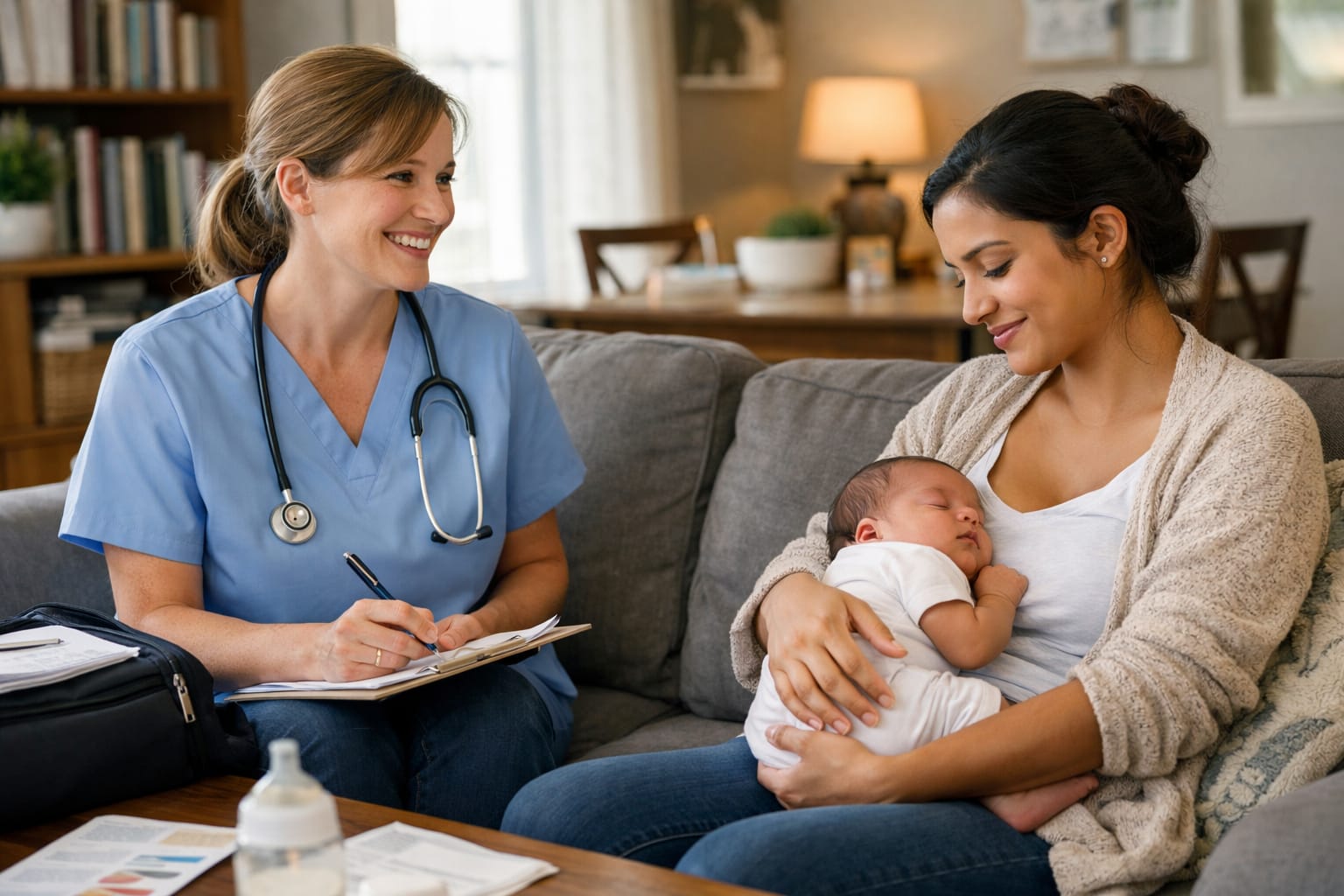
A nurse at the kitchen table changes that dynamic.
During these visits, clinicians check on both the newborn and the parent—monitoring physical recovery, offering guidance on feeding and care, and, notably, assessing mental health. The home setting, providers say, can make it easier for new parents to speak openly about anxiety, depression, or the quiet uncertainties that often go unspoken in a clinical exam room.
There is a larger goal here. State officials describe the visit not as a one-time service, but as a front door—an entry point into a broader system of early childhood and family supports. For families who need more, the visit can connect them to lactation services, food access, or ongoing care.
The model is not entirely new. Targeted home visiting programs already exist in parts of Massachusetts, and similar approaches have been used in other states and countries. What is different is the scale—and the universality.
Offering the service to every family, rather than only those deemed “at risk,” is intentional. It removes stigma. It reframes support as standard, not exceptional.
Still, questions remain.
One visit, some clinicians note, may not be enough to address the range of challenges families face in the postpartum period. Other countries often provide a series of visits, creating continuity over time. Massachusetts, for now, is starting with a single touchpoint—balancing ambition with cost and logistics.
Funding reflects that balance. The governor’s budget proposal includes state support to expand the program, with insurers expected to share in covering the visits themselves. The initiative traces back to a broader maternal health effort. It was part of a 2024 maternal health law that also included provisions to increase access to midwives, doulas, and other services.
In that context, Welcome Family is less a standalone program than part of a larger shift—one that recognizes the early weeks of life as a critical window for both child and parent.
It is also a recognition of something more basic.
Care does not begin and end in hospitals or clinics. It happens in homes—often quietly, often without witness.
Massachusetts is betting that showing up there, early, can make a difference.
Additional Info
Related Links : https://www.wbur.org/news/2026/03/16/newborn-baby-home-visits-massachusetts